2/6 Blog

In the NPR Radio, “Manipulation” describes how in our modern world, manipulation of our ideas, thoughts, and feelings could be easily achieved through technology. The podcast interviews various people, each explaining their perspectives on the matter. Tristan Harris shared how digital devices have become manipulative in their ways it gathers human attention as well as people’s social lives as well. Ali Velshi described how even the news can be twisted and framed, rather than share the plain facts. Elizabeth Loftus explained on how even our own memories can or do believe in false memories.

This segment was really eye-opening. Thinking back to when I got my first phone, I was in middle school and I got a thick, boxy, dark blue flip phone. Keeping in mind it was 2013, everyone else already had smartphones. I was really embarrassed by my phone so I never told anyone I even had one. This memory just shows how even the devices can create the unfair view that one is better than the other.

How young were you when you got social media? And how did it affect your social life?
2/6 FoE

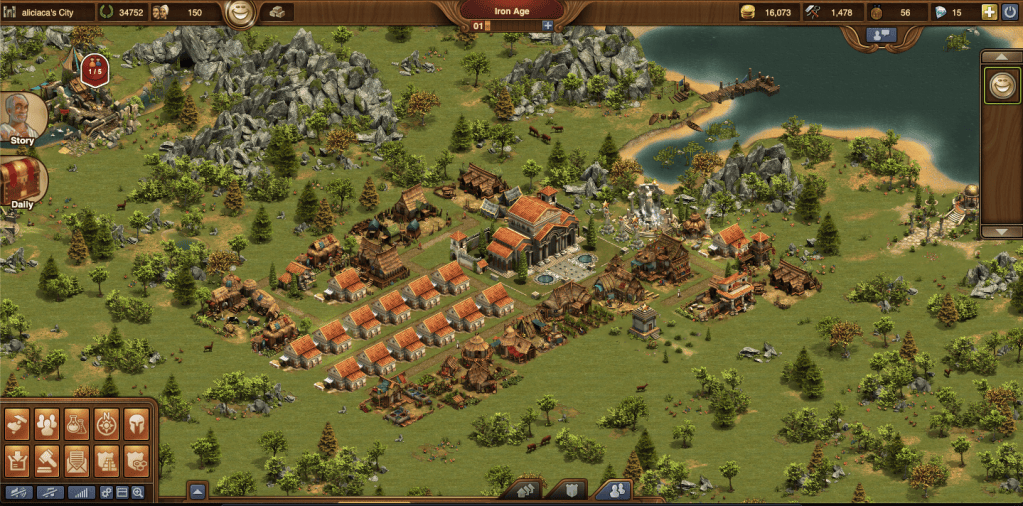
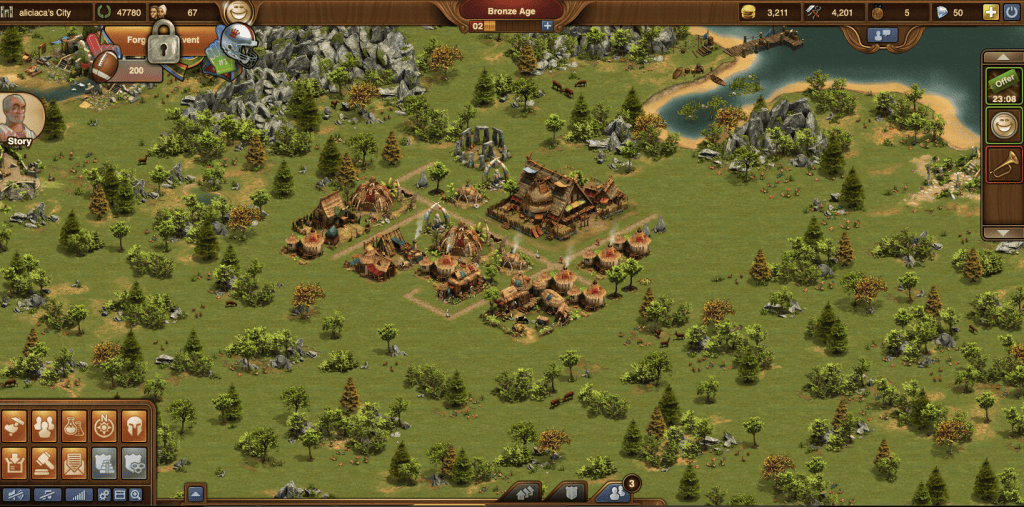
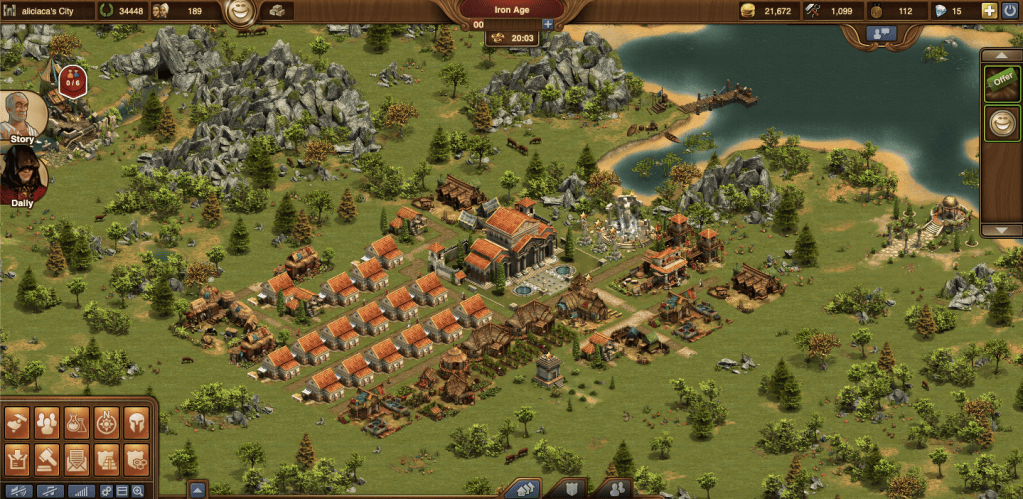
My current city
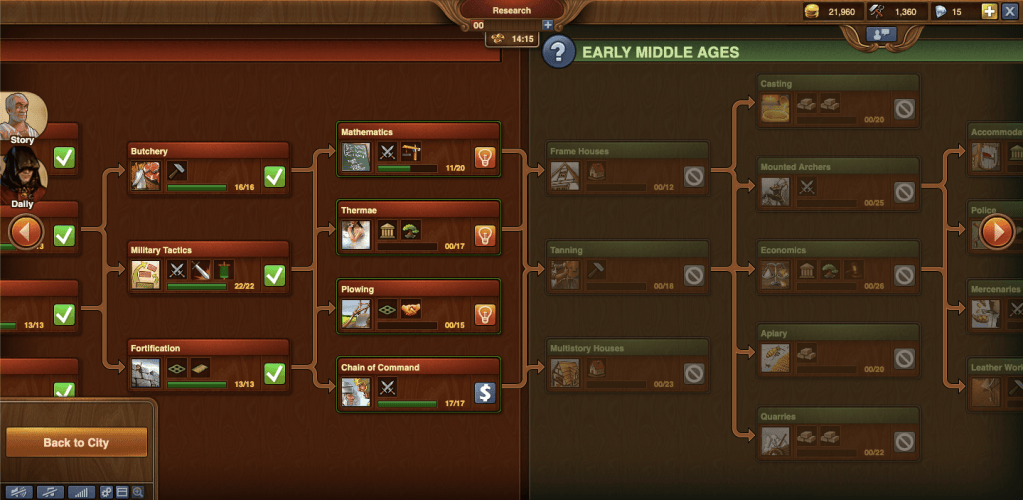
  1. Technology Ages- I am on the verge of being in the Early Middle Ages but it has become significantly difficult to complete the research requirements. At first, you could spend the forge points and then pay with coins and supplies to earn the technology. Now, you spend almost double the forge points and then need very rare supplies like jewels and dye.
My current technology page

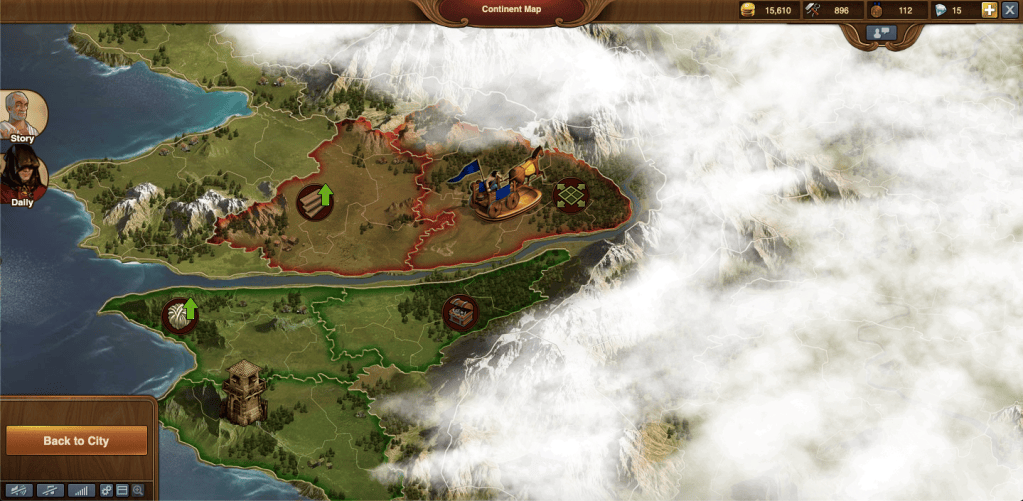
2. Continent Map- Just like with the technology aspect of the game, it has become increasingly difficult to win sectors. I want to make my army stronger but I can’t unless I conquer more sectors. I keep having to use army boosts to win but that isn’t sustainable.

My current continent map

FoE 2/4

  1. Educational Redesign- The way I currently see it, the game provides a possibility of reference throughout the class. For example, teachers can say, “Frame houses came around in the early Middle Ages, like in the game Forge of Empires,” and students could have a visual of what the teacher means. A redesign would be to make the game historically factual with the correct technologies and attitudes for each time period.
  2. For me, the game currency system is fine as far as games go. Diamonds do run everything but it is doable without making additional purchases. Other games similar to this that I have played make it almost impossible for you to succeed without making purchases.

2/4 Reflections

In Patriot Act, Hasan Minhaj was painting a picture of the cruel reality of the game developers’ careers. Since it has become such a lucrative career, the people actually making things work have had to face harsh situations like getting laid off with no severance, being harassed, working terrible hours, and are coming together to unionize. Turkle explains how in a world where everyone is connected, we are actually so alone. The always online nature of our phones and social media prevents real bonding from happening. Boyd’s talk was about teenagers and their terms of privacy growing up in a world surrounded by social media, especially in terms of what their parents are looking at. Lastly, Giroux very discusses how Disney has become a mega-corporation, seeping into the lives of everyone, but especially children. This all has become a form of priming for children to be working pieces of our capitalistic society.

My students all adore anything and everything Disney. And, while I do have a sweet spot for the movie Coco, I do not share their love for the corporation. Growing up, I was of course surrounded by it with friends going to Disney Land, watching the Disney channel, and bringing princess dolls, but my parents stressed that I watch PBS Kids only and the toys I did have were more like art supplies and puzzles. I thank them now. A huge problem I see happens at work. I see kids come back from Disney Land with their toys, sweaters, etc. and I see the looks on other children’s faces who have never been because their parents can’t afford it. If the Disney dream were within the grasp of everyone, I’d have less strife with it.

How old should people be to have social media?

1/30 Blog Post Reflections

The Vikaros and Degand article discusses the effects that gaming can have on moral-development. This is because educational games allows the players to put themselves in others’ shoes, making decisions from their perspectives. Fantasy helps them to develop moral thinking and decision making. In the Schaefer article, it is explained how feasible incorporating FitBit technology is and how it presents students the opportunity to counteract the health crisis; in addition, it provides students the motivation through competition and positive attitude changing. In the McGonial TedTalk, she explains that gaming can bring positive changes and allow a framework on life in order to get through tough challenges. She notes how gaming can affect motivation and positivity, adding the minutes to her audiences lives that she promised.

It was really interesting to read the Schaefer article since it touched on FitBits. I wear a smart watch that can track my exercise. It does have a feature that monitors heart rate and I have noticed that when my heart rate is elevated, it sends a message to “breathe” and bring myself back to baseline. This is especially important to me because I tend to overthink little things and spiral. Once my watch sends the reminder to breathe, I breathe along with it and I calm back down.

How can P.E. teachers (without the funding for FitBits) incorporate technology as well?

1/30 FoE Post

  1. There are definitely educational possibilities. I feel like the game is strongest, in that aspect, with getting students excited about history in the first place. If it were my own classroom, I would include this game as a free time activity or for Fridays so that students get the opportunity to have fun but still be doing something educational. However, I think it would be fairly difficult to employ the game throughout the year as a tool since it moves so slowly, compared to how quickly the lessons go. For instance, I remember only spending two weeks learning about the Renaissance, making this game too slow to play, just for those two weeks. Nevertheless, playing this game could help because it is something for students/educators to reference when thinking about history.
  2. I downloaded the app to my cellphone. I found it much easier to do the “chores” of the game, like collecting money and supplies, but I still prefer playing on my laptop. My laptop allows me to battle, research new technologies, and re-organize my village much more easily.
  3. I am hooked on this game. I even got my boyfriend to play it. It’s really satisfying to collect the money and supplies. I still don’t like battling but I need more land.

1/28 Blog Post

The Kellner and Share article explains the importance of thinking and learning through means of new media, mass communications, new technologies, and popular culture. This would even the playing field in terms of communication and reach and allow a more equal opportunity for all to express themselves. The Teaching Social Studies with Video Games article argued that the characteristics of video games, like strategic decision making, problem solving, and social engagement, make a great tool for teaching. The Political Internet Games article explained that games with a political topic like mass shootings or assassinations allow people to engage with more serious topics and develop their political self. And finally, the Creating Critical Play article explored the topic of video games and their effects, arguing that games that touch on topics like social, political, or educational topics and in turn open a dialogue for the players.

Personally, I never realized how much video games can provide for students. I am not a huge fan, especially of violent games or money-grabbers where you have to pay for everything. I have seen my brothers entranced by the TV, just staring and moving their hands over the remotes. Thinking back now, I see that they are making split second decisions, working as a team sometimes, and even learning to lose. Reading the articles, they clearly show how effective video games can be used as a resource for learning so I am gonna work on weaning my brothers toward those.

Do video games have to be historically accurate or can they bend certain things for the sake of entertainment? Where should the line be drawn?

1/28 FoE Journal Post

  1. Avatars: Like I mentioned in my first reactions to the game, none of the characters really look like me. They are all much older and as of yet, I do not see anyone any race other than white, despite their inarguable existence during every age of history I have played in the game so far.
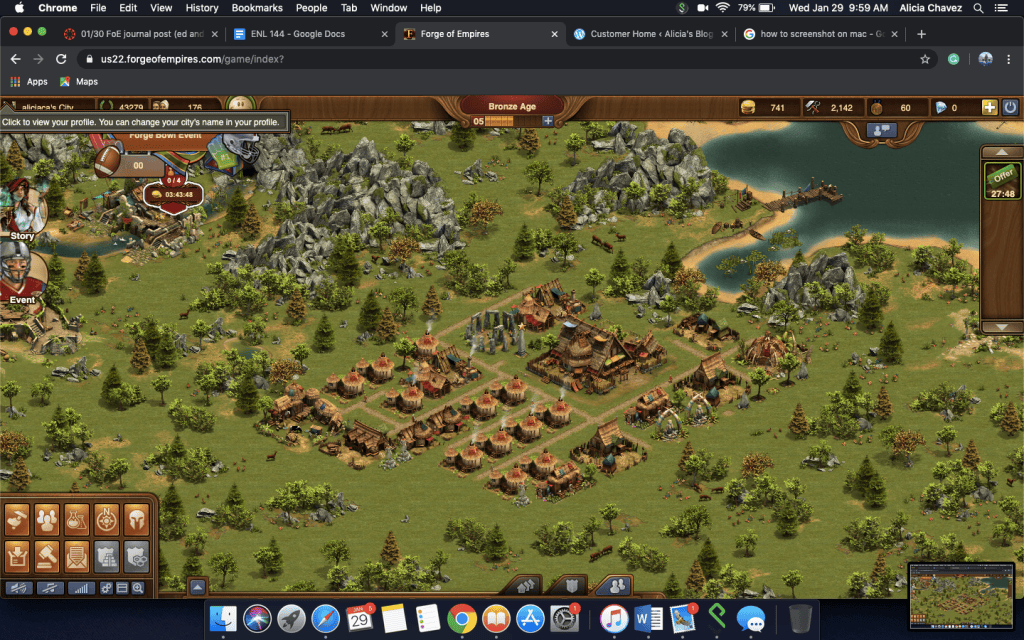
  2. GUI: I’m not exactly a tech expert (or even a novice) but the GUI was easy enough for me to follow. I like that there are symbols rather than just a bunch of tiny writing. One issue I faced was clicking the wrong symbol but the solution was hovering over it and reading the label that popped up.
  3. Personal Take: I am getting into the game. It is fun to collect the coins and reorganize the village. I still don’t like the battling and I honestly don’t quite understand the gameplay. Is it like chess? Why do I get to move twice sometimes?

FoE Lab

  1. Username: aliciaca
  2. Name of City: Aliciaca’s City
  3. World Name: Walstrand
  4. My Experience: None of the characters looked like me in terms of age or race, since they were much older and white. It was also very slowly paced in the beginning. On that point, the initial introductions were slow but everything else was confusing and unclear. Personally, I don’t really like that battles is the only option. I feel sorta bad attacking people.

Blog Post 1/23

In the Kraehe and Brown (2011) research article, they emphasized that topics on race, gender, and class are important one to discuss with students since social inequality is one that almost everyone faces in some way. They discussed how art, ranging from collages to skits to videos, could work as the medium of expression, working to normalize expression. In the Real Life book, the empowerment of women went a long way since Anda, the main character, was able to help bring about change in a whole different continent, through the means of video games.

Personally, I do not game so I had no experience with the whole making a player or collecting gold that Anda’s character did. However, I do relate to her experience of feeling helpless in a world where she wanted to help. It can be hard to watch the news and sit back doing nothing when I see people suffering. That is one reason why I want to be a teacher. In my current job working with 4th graders, I do open up the space to talk about hard topics during our ‘team talks’ where we have touched on the topic of gender stereotypes and religious intolerance. I never considered using art as the medium for my students’ expression. It is definitely something I am incorporating into my lesson plan.

What can educators do to become more informed on various injustices, enough to where they can discuss it with their students?

Design a site like this with WordPress.com
Get started