Blog Post 3/03

Steinkuehler’s video is surrounding the topic of connecting learning and gaming. She explains that teenage boys tend to be disinterested in school yet are the biggest audience of video games. She learned that a “follow-their-interest” model is most effective and advocates that education material aligns with the goals and interests of the students learning it. On the NPR podcast, experts got together to discuss a bias in technology. They explained that algorithims are sorting people by various groups like gender, race, class, etc. and this leads into a conversation about context. How do we judge and decide good algorithims from the bad? This is where Algorithims of Oppression comes in. The message there is that algorithims are inherently racist and sexist, making it very important that something gets done to change that. Degand’s research looks at the “social success skills” that are needed to achieve social success. This is then connected to the difference of how different races are portrayed in the media and the issues that come with misrepresentation.

When I was in highschool, I was in a robotics club where we built, wired, and coded a robot from scratch to compete across California. In order to do the building, we had to fundraise and get sponsors. My focus in the club was on electrical work and raising funds. Often, when our robot needed fixing during the competetion, people were surprised to see me, a Mexican girl. When it came to presenting our project to potential sponsors, people were surprised to see me, a Mexican girl. I know that in the media, Mexican people are often portrayed in a negative light, and especially immigrants. I know that my existence in those spaces challenged people’s perceptions and I am grateful to be able to do so.

How can we approach these topics in the classroom? When and where?
Blog Post 2/27

Preston analyzes Illmatic, a music album made by Nas, and points out how the music he creates joins poetry and art with personal reflections of him and his community. The Gosztola article showed how “Chris Columbus” is a song about Christopher Columbus, his misrepresentation as a hero rather than imperialist, and how he is responsible for the death and destruction in the Americas. The “First Nations” music video is a very education piece that shows and discusses different cultural aspects of Native American people across North America. Finally, “Last Emperor’s Secret Wars” shows the blend of comic books, rap, and story telling as the comic book heroes as they faced each other.

After having the discussion about integrating rap music as a class in high school, these songs really took me back to some of the comments and points expressed there. It is clear to see the amount of creativity that goes into making a rap song in addition to what is left to teach students about different types of flows, rap history, different technologies, etc. These songs were very much telling a story and it really made me interested in what students would say or bring up.

Is playing a ‘clean’ version of a song for students censorship of the artist’s message? If so, how could educators approach incorporating songs with not-so-school-appropriate language?

FoE 2/27

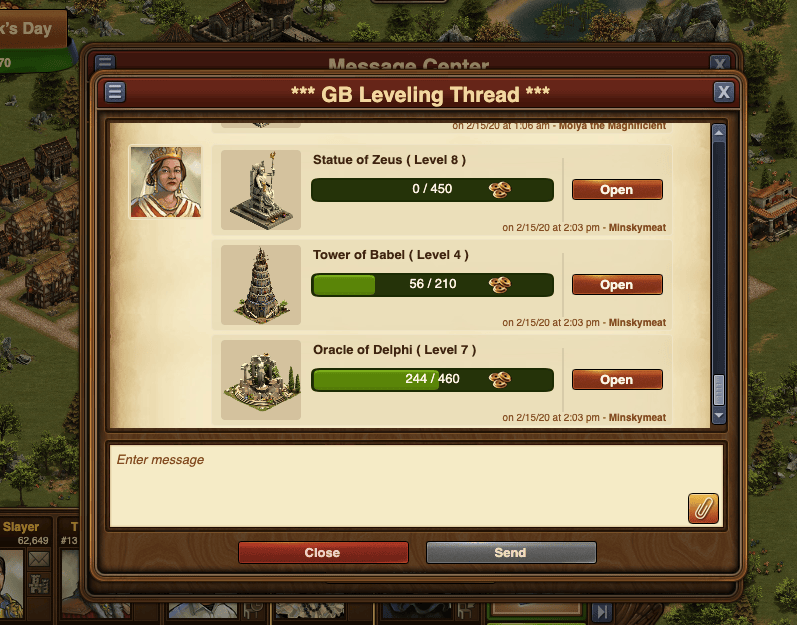
  1. Guild messages and chats- This past week, I actually had a conversation with someone. I asked for advice on which great building would be most useful to me since I am running sort of low on space. A player by the name of Kryscat answered me and we exchanged a few messages. I found it funny that they had to go make dinner because I was barely getting into work at 3. The time difference makes me wonder if they live on the East coast or if they just eat a really early dinner. Overall, it showed me that strangers on the internet aren’t all creepy men, some people can be quite helpful.

2. Progress- From my last post to now, I have finally crossed over into the High Middle Ages. Considering I started playing this just a few weeks ago, I am proud of the progress I have made. Still, I know it’s just a game so I probably won’t be flexing this to people outside this class. Siri had asked if I was still going to continue playing after the assignment is over. I hadn’t really considered stopping. I probably won’t play for five years like the professor but for as long as it keeps my interest like it has been now.

Blog Post 2/25

Adam Dunbar discussed how rap music, prejudice, and race all join to put a cover on racism and just call it criticisms of rap. He then explains how the perceptions derived from music affect policy reform and he suggests that we look deeper into that so that we better understand the implications. Martin Connor recommended that we look past just the lyrics and actually observe the various ways rappers use their voices (which instantly brought Kid Cudi’s hums to mind). Music and its popularity goes beyond lyrics. “The Birth of American Music” shows how much of American music has come from Black music. And, in episode 1 of Dissect, we get an explanation of the series that explains Kanye West’s “My Beautiful Dark Twisted Fantasy.” Here, we learn more about how Kanye began and the hardships he faced at the beginning of his career. Episode 2 explores “Through the Wire,” basically the song that brought him fame. In addition, the episode discussed some of his unique traits that helped boost him to stardom.

I actually have very mixed feeling surrounded Kanye West. Not too long ago, he was my absolute favorite artist. I even went to his Pablo Tour. However, at that concert, he left after playing 3 songs, complaining about the crowd and Sacramento. It was my first concert ever. I was heartbroken. And after other comments he has made, I don’t listen to his music and he has been completely erased from my phone. I have also noticed a difference from his earlier stuff to now, which is natural for an artist of course, and I am not a fan of the newer stuff. He is an incredibly interesting artist and this surprisingly isn’t the first time I talk about him in a class. I learned about him in my psychology class when we discussed narcissism because he is truly a prime example of that behavior.

How has music impacted your education? Has it ever been in the classroom in your experience?

FoE 2/25

  1. Guild setup and messages- this past week, most of the messages have been about leveling up each other’s Great Buildings. I have to read new messages pretty much every time I open the game because this guild is very communicative. They explain how many donations we need, where to play, and even provided guidance for others on the St. Patrick’s game. This is all very helpful so that we can all advance.

2. Reflect on how far you’ve gotten since you first signed up for the game. How has your city grown? How has your thoughts about the game changed or stayed the same?

My city has grown a lot since we first started and I really love playing this game. Now, I am on the verge of being in the High Middle Ages when I started in the Stone Age. I’ve also learned where to place things for efficiency and that made it more fun to collect the money, goods, and supplies. When we first started playing in class, I was confused about a lot of things so I didn’t really like the game. After a few days, I got the hang of it and I really grew to love it. For me, I like getting to unlock things in a game so I love unlocking the various research goals. That is what got me hooked.

Blog Post 2/20

In the Ladson-Billings article, they explain their main points for how we can culturally sustain pedagogy and how that provides opportunity and new methodology for learning by giving educators the tools to better understand culture and enhance teaching experiences. In the Winn article, it is argued that English classes can be a gateway into creating space to explore and seek justice outside of the classroom, incorporating it to communities. In the video with Buechley, they explained how companies aim and include upperclass white men while women, people of color, lower socioeconomic classes, and other minority groups are overlooked for the same things. They said to instead show a diverse group of people doing the same things so that it can be accepted that everyone is truly capable, which they are. In the “Can Restorative Justice Save the Internet” podcast, they explored the ways restorative justice would be like a preventative measure, helping to lower cyberbullying and incarceration.

The after school program I have the pleasure of working at actually implements restorative practices. It is our first year doing it and it has greatly improved. Last year, we had a strict 3 strike policy in place and it was very easy for kids who didn’t want to be in the program to just act out and then get kicked out. Now, when we notice a pattern of more negative behaviors, we have a conference with the student and the parents. In addition, the 3 strikes are not as strict since the coordinator can now decide if the student should help beautify the school, help a different grade, or other more positive consequences.

How can we get more of the current teacher population to incorporate this?

FoE 2/20

  1. Discuss your experiences in your guild so far- So far, my guild has mostly just been sending me requests to contribute to their Great Buildings. I get 4 or 5 messages everyday in a group chat that we have. When I visit their cities, it is clear that they have been playing this game for much longer than I have.

2. Discuss the pace of the game and compare it to other video games that you’ve played- When I first started playing, it was very easy and quick to move upwards with expansions, unlocking new materials in battles, and advancing in the eras. Now, It has taken me a whole week to unlock 3 new technologies and I haven’t won a battle in quite a few days. I have noticed this happens with other games I have played. Nathan told our group in class that he often notices that this is a trend so that people feel like winners at first, like they’re good at the game, in order to get them hooked on it.

2/18 FoE

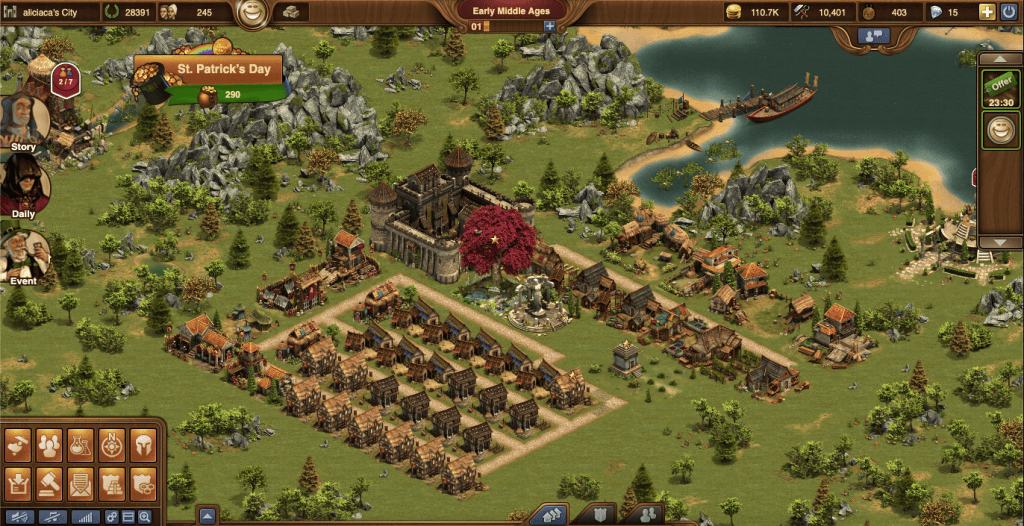
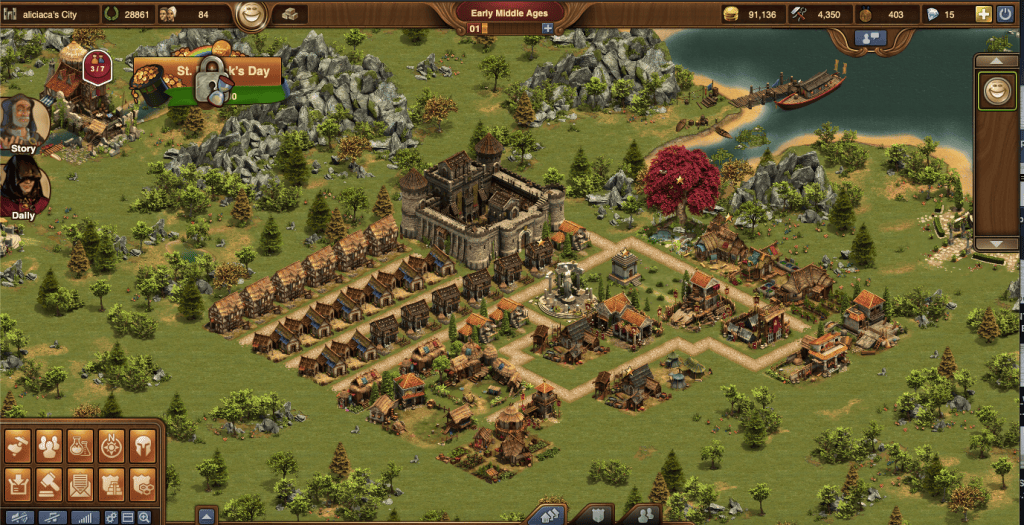
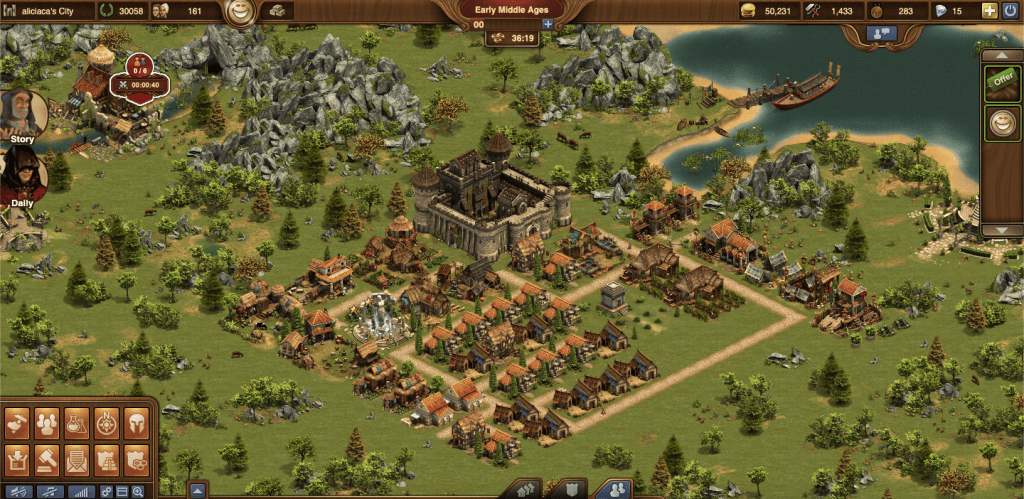
  1. City Layout/Planning- When I first started playing, it was much easier to earn expansions through battles or researching technology. Now, both of those things have become increasingly difficult, making expansion difficult. After researching ‘Mathematics’, I earned a handy-dandy tool called “construction” where I can put everything into temporary storage so that I can organize at my leisure, without worrying about space or scooting everything one-at-a-time. I have found it most convenient to group everything alike together so that I can collect the money or supplies or whatever it may be, in one fell swoop.

2. Battle Experience- Right now, I am at a point where my army is weak compared to everyone else but I don’t have the amount of supplies or space to build a better and more advanced army. So, I keep losing at the guild battle grounds and at the continent map. However, when it comes to attacking other players and stealing their stuff, I usually win because they do not have a super strong army defending their city. I use this sparingly because I also do not have a strong army defending my city and I do not want them to retaliate. I mostly use the plundering feature when I need more rare/out of reach supplies like marble or jewelry.

2/13/20 Blog Post

The reading by Billings explained why culturally relevant pedagogy in schools. Culturally relevant pedagogy is committed to the empowerment of everyone, not just one person or group. It is critical to making all students feel like they have a place in school to learn and feel heard. In the Critical Race Theory reading, the authors Delgado and Stefancic described some elements of the movement. For starters, the Critical Race Theory movement is about studying and changing the relationships of race, racism, and power. Applied in schools, many scholars realize that discipline and hierarchy, tracking,  affirmative action, high- stakes testing, controversies over curriculum and history, bilingual and multicultural education, and alternative and charter schools can have adverse effects on students. The Decisions that Matter showed how we have the power to change things. It showed very real and common situations which makes for great discussion starters in a classroom environment.

When I took EDU 150, my professor made sure his own teaching practices encompassed culturally relevant pedagogy so I was really lucky to see it in action because I cannot think of a single K-12 teacher who did. When I volunteer in a 5th grade classroom now, I see that the teacher tries to connect with her students and give them the platform to share. In addition, she often shares stories and ties lessons to her own Filipino culture. I have seen firsthand the effects that has on students since they often get excited and blurt out “OH my grandma does that too!”

Is using Decisions that Matter appropriate in schools? How young is too young?

FoE 2/13

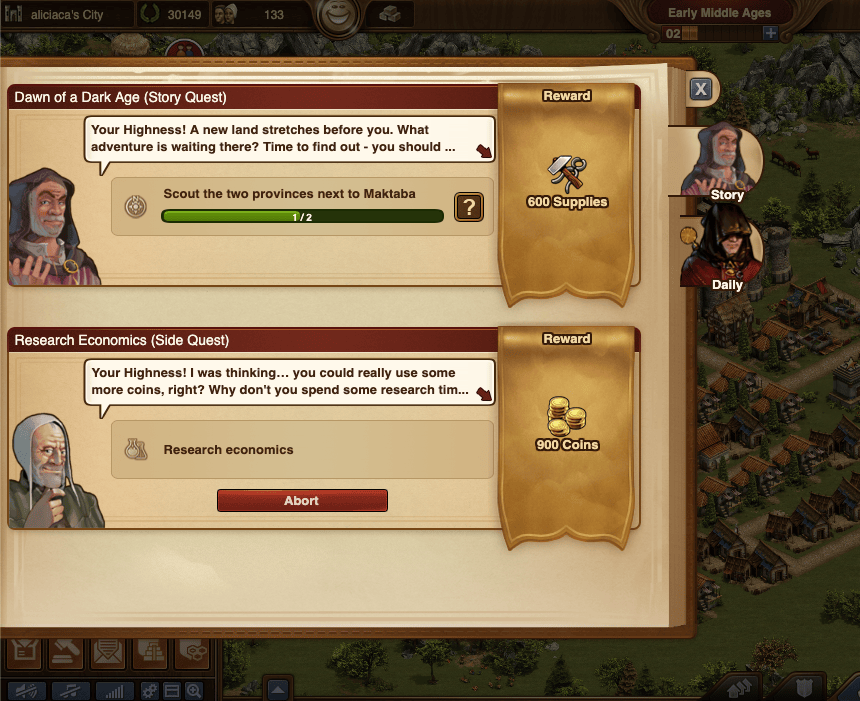
  1. the ongoing storylines- These are still fairly easy for me to achieve. At first, they were really easy to complete since sometimes you just had to pay money or build something. Now, they are more challenging since they take more time and commitment.

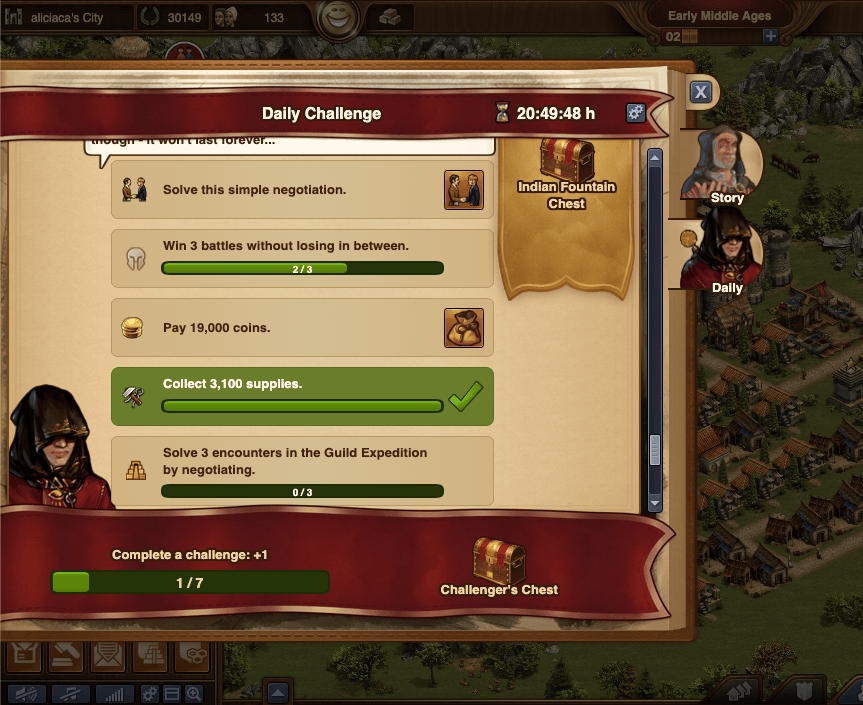
2. The daily tasks- These are a huge chore for me personally. I think the challenges are way too much for just being a daily thing. Just yesterday, I had to earn 1,000 tavern coins (and I only got 504). I prefer the ongoing quests much more.

3. The Archeology event- I can’t find any archeology event. I do not know if I just haven’t unlocked it yet or if it isn’t available in my world.

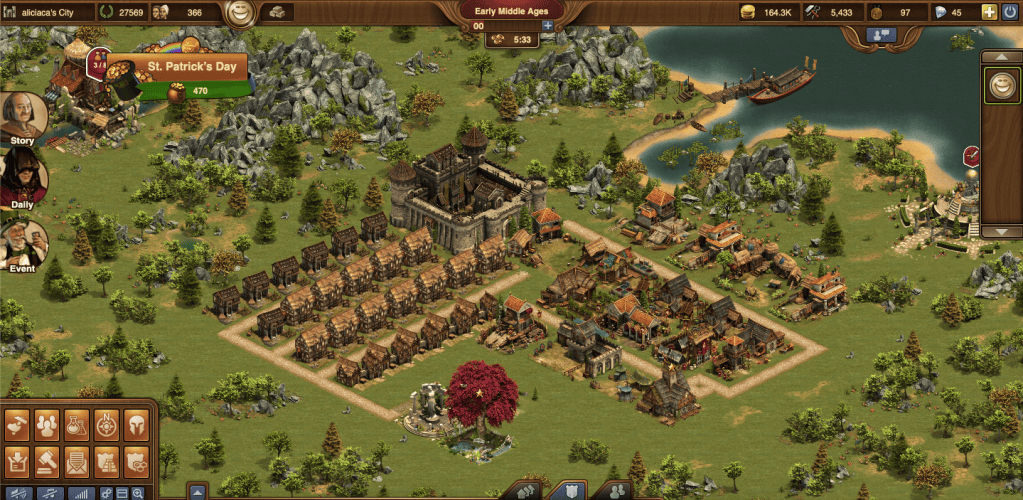
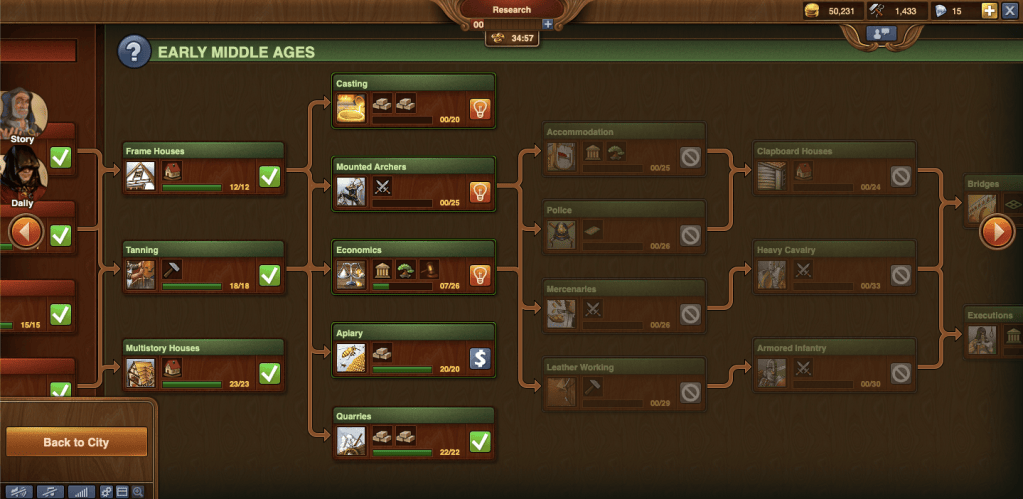
4. Overall, I am really enjoying the game. I am in the early Middle Ages and I am working on unlocking economics. I luckily have lots of coins but I am really lacking supplies. Not having enough supplies makes it hard to complete certain research points or upgrading my buildings.

Design a site like this with WordPress.com
Get started